
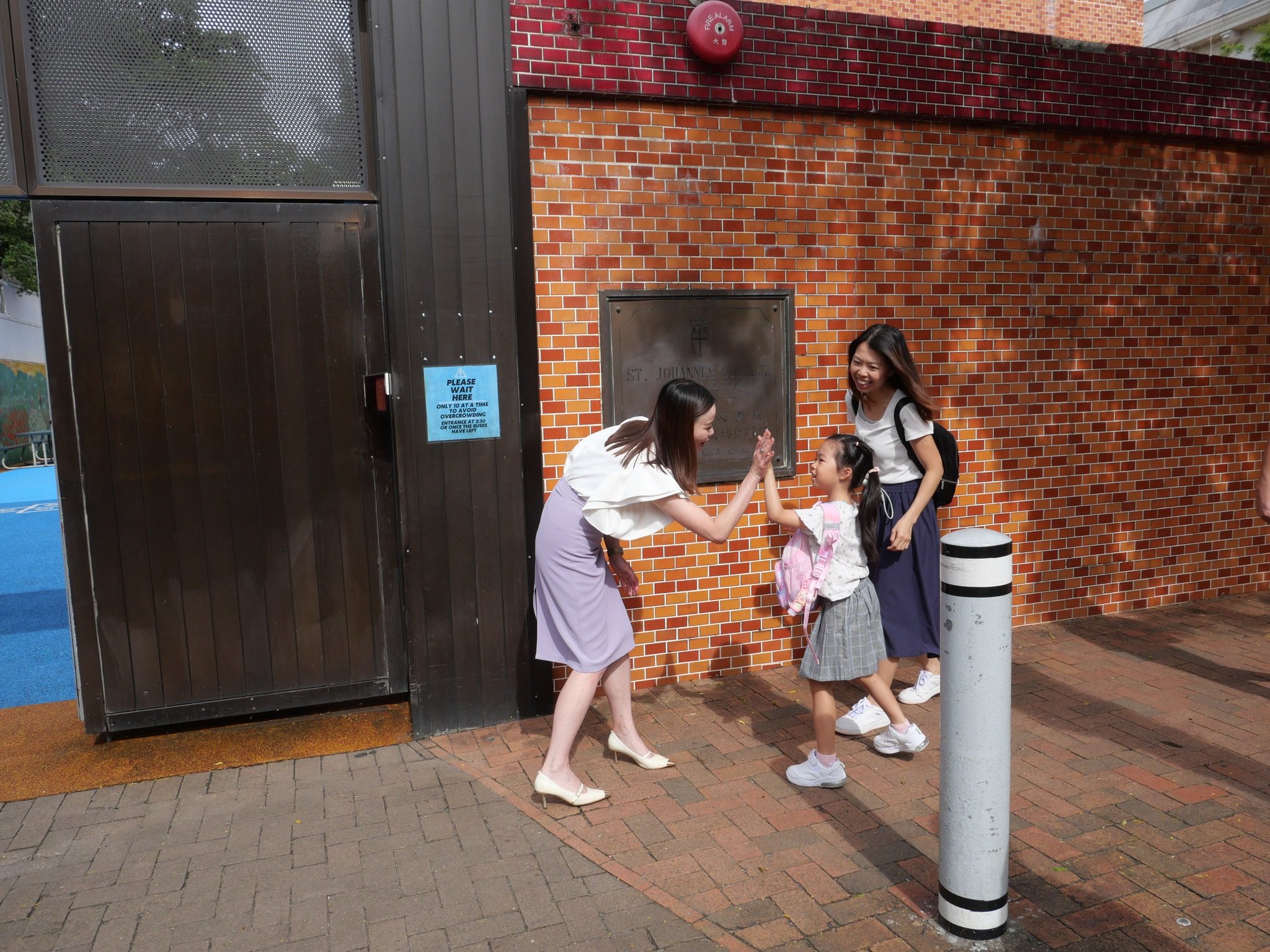
St. Johannes College hopes that all children can learn and grow healthily in a harmonious environment, and thus enacts policies for all to follow.
It is our responsibility as educators to promote the optimal intellectual, physical, emotional, and social well-being of each child at St. Johannes College. We believe that children have the right to be protected from harm, abuse, exploitation, and neglect. As educators in a global community, we have a collective commitment, responsibility, and duty to protect students and provide a safe and secure learning environment. To fulfill this duty of care, St. Johannes College has committed to embedding safeguarding policies, procedures, and guidelines into the overall operations of the school.
SJC Uniform Policy
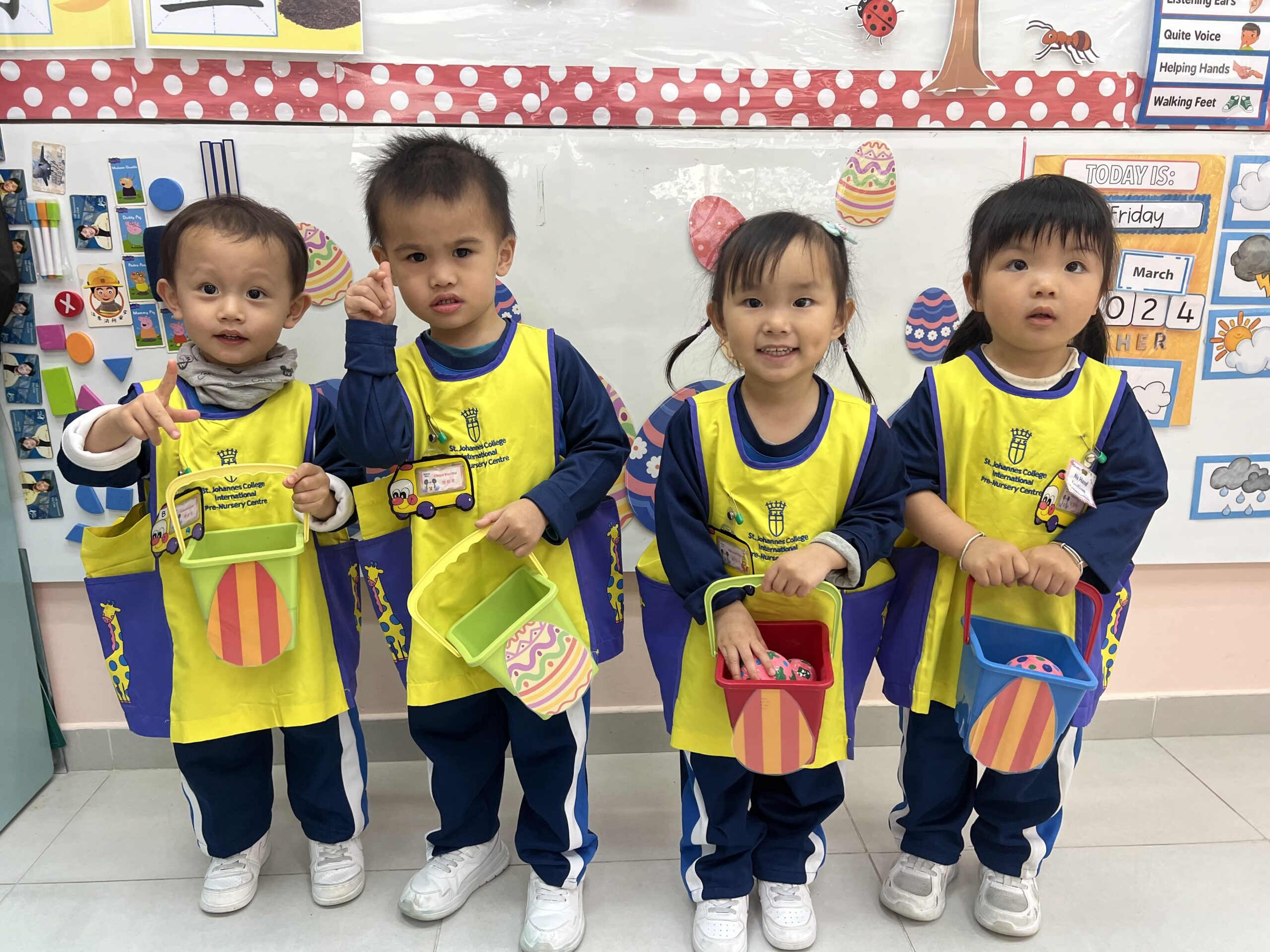
St Johannes College prides itself on maintaining high standards of personal appearance and grooming. The school uniform symbolizes unity, equality, and pride in belonging to the SJC community. All students are required to wear the correct and complete school uniform as detailed below, ensuring they present themselves neatly both inside the school and during external public events.
| Grade & Season | Summer Uniform | Winter Uniform |
|---|---|---|
| Pre-Kindergarten (PN) |
Boys / Girls SJC Polo uniform, apricot apron with white socks and white sport shoes. |
Boys / Girls SJC Tracksuit, apricot jacket, white socks and white sport shoes. |
| Kindergarten 01 (K1) |
Boys / Girls SJC Polo uniform with SJC shorts/skirt, apricot apron with white socks and white sport shoes. |
Boys / Girls SJC Tracksuit, apricot jacket, long sleeves shirt, apricot vest with white socks and white sport shoes. |
| Kindergarten 02 & 03 (K2 & K3) |
Boys / Girls SJC Polo uniform with SJC shorts/skirt, apricot apron with white socks and white sport shoes. |
Boys / Girls SJC Tracksuit with SJC trousers, long sleeves shirt, apricot vest with white socks and white sport shoes. |
| Primary 01 (P1) |
Boys White short sleeves shirt with SJC badge, green shorts, white socks and black leather shoes. Girls White short sleeves dress with SJC badge, green belt, white socks and black leather shoes. |
Boys Green long sleeves shirt with SJC badge, green tie, SJC jacket, green trousers, white socks and black leather shoes. Girls Green long sleeves dress with SJC badge, green tie, SJC jacket, SJC pullover, white socks and black leather shoes. |
| Primary 02 & 03 (P2 & P3) |
Boys White short sleeves shirt with SJC badge, green shorts, white socks and black leather shoes. Girls White short sleeves dress with SJC badge, green belt, white socks and black leather shoes. |
Boys Green long sleeves shirt with SJC badge, green tie, SJC jacket, green trousers, white socks and black leather shoes. Girls Green long sleeves dress with SJC badge, green tie, SJC jacket, SJC pullover, white socks and black leather shoes. |
| Primary 04 & 05 (P4 & P5) |
Boys White short sleeves shirt with SJC badge, green shorts, white socks and black leather shoes. Girls White short sleeves dress with SJC badge, green belt, white socks and black leather shoes. |
Boys Green long sleeves shirt with SJC badge, green tie, SJC jacket, green trousers, white socks and black leather shoes. Girls Green long sleeves dress with SJC badge, green tie, SJC jacket, SJC pullover, white socks and black leather shoes. |
SJC Anti-Bullying Policy
St Johannes College is committed to providing a safe, supportive, and inclusive learning environment where all students are treated with dignity and respect. Bullying of any kind is strictly prohibited and will not be tolerated within our school community. This policy outlines our collective framework for preventing, identifying, and responding effectively to bullying behaviors.
🛑 Zero Tolerance Statement
Bullying hurts and prevents children from progressing. Our school community rejects bullying in all its forms. Every individual has the right to be protected from intimidation, harassment, and discrimination.
1. Understanding & Defining Bullying
Bullying is defined as the repetitive, intentional hurting of one person or group by another person or group, where the relationship involves an imbalance of power. It can happen face-to-face or through digital platforms.
🔍 Key Characteristics
- Repetitive: It happens more than once or has the potential to be repeated over time.
- Deliberate: The harm caused is intentional, not accidental.
- Imbalance of Power: The person bullying uses power (physical, social, or psychological) to control or harm others.
⚠️ Common Forms of Bullying
- Physical: Pushing, kicking, hitting, taking or damaging belongings.
- Verbal: Name-calling, teasing, threatening, insulting, or making offensive remarks.
- Social/Indirect: Spreading rumors, excluding someone from groups, or public humiliation.
- Cyberbullying: Harassment via text, social media, apps, or online gaming platforms.
2. Proactive Prevention Strategies
SJC adopts a multi-layered approach to foster a school culture built on empathy, kindness, and communal accountability:
- Curriculum Integration: Bullying issues, values education, and digital citizenship are actively taught through Assemblies, Life Education classes, and regular class teacher periods.
- Supervision & Vigilance: Staff members maintain high alertness and continuous monitoring during recess, lunch hours, and transition times across all school areas.
- Empowering Bystanders: Students are taught to recognize bullying behavior and are trained to safely intervene or report incidents immediately, shifting from “passive bystanders” to “active defenders.”
3. Reporting Procedures and Support
When an incident of suspected bullying is reported, the school will act swiftly and follow structured disciplinary and counseling protocols to ensure long-term resolution:
- Immediate Intervention: The incident will be investigated thoroughly by the Class Teacher, Discipline Team, or School Counsellor. Evidence and interviews will be documented objectively.
-
Supportive Guidance (Self-Tuning):
- For the Victim: Safe spaces, immediate reassurance, and ongoing counseling to rebuild confidence and social security.
- For the Perpetrator: Structured intervention to help them understand the impact of their actions, take responsibility, and correct their behavioral patterns.
- Parental Engagement: Parents of all involved parties will be informed promptly. SJC works collaboratively with families to build joint supportive strategies between home and school.
- Escalation and Review: Serious or persistent incidents will be escalated directly to the Deputy Principal and Principal. Progressive disciplinary measures will be enforced fairly and firmly in accordance with school regulations.
Acceptable Use Policy (AUP) for Digital Learning & AI Integration
SJC utilizes a broad suite of digital interfaces, Campus TV operations, and tablet-based learning modules. This policy establishes firm operational boundaries for technology integration:
Digital Citizenship & Platform Guardrails
Students may only utilize school hardware and the campus network for verified educational tracks. Access to unverified streaming platforms, gaming portals, or private communication applications is strictly blocked at the firewall level. Cyberbullying or unauthorized distribution of peer images via school channels results in an immediate suspension of digital privileges.
Generative AI Boundaries in Project-Based Learning
In alignment with SJC’s emphasis on progressive inquiry, the use of Generative AI tools (e.g., LLMs, image generation software) is permitted exclusively as an ideation or research assistant under direct teacher supervision. Students must explicitly cite AI assistance in a dedicated ‘Digital Log’ appended to their projects. Submitting completely unedited AI-generated text as original student work constitutes academic malpractice and requires resubmission.
Data Privacy Compliance
Staff are strictly prohibited from uploading student personal data, full graded work matrices, or student photographs onto external, unverified AI platforms or public cloud databases, ensuring compliance with the Personal Data (Privacy) Ordinance of Hong Kong.
Assessment Policy 2025-2026
Assessment Arrangement for Major Subjects
| Unit / Chapter / Module | Progress Review (Term 1 & Term 2) |
Final Assessment (Term 3) |
|
|---|---|---|---|
| Frequency | After each unit / chapter / module | 2 times per year | 1 time per year |
| Weighting | P1: 60% P2 – 5: 30% |
P1: 40% P2 – 5: 70% |
P1: 40% P2 – 5: 70% |
| Subjects to be assessed | Chinese Language, English Language, Mathematics, General Studies (Science & Humanities) | ||
Assessment Arrangement for Minor Subjects
| Unit / Chapter / Module | Progress Review (Term 1 & Term 2) |
Final Assessment (Term 3) |
|
|---|---|---|---|
| Frequency | After each unit / chapter / module | 2 times per year | 1 time per year |
| Weighting | P1: 60% P2 – 5: 40% |
P1: 40% P2 – 5: 60% |
P1: 40% P2 – 5: 60% |
| Subjects to be assessed | Mandarin | ||
| Frequency | After each unit / chapter / module |
| Weighting | P1 – P5: 100% Daily Components |
| Subjects to be assessed | Information Communications Technology / Music, Visual Arts / Physical Education |
Marking Guidelines and Grading Procedures
💡 General Guidelines: All the papers or assessments should come with the graded rubrics and / or marking scheme.
✔️ Passing Status: Grade A, B & C are regarded as pass, whereas Grade D is regarded as fail. Please refer to the following grading system:
| Grade | Marks |
|---|---|
| A+ | 100 – 96 |
| A | 95 – 91 |
| A- | 90 – 86 |
| B+ | 85 – 81 |
| B | 80 – 76 |
| B- | 75 – 71 |
| C+ | 70 – 66 |
| C | 65 – 60 |
| D (Fail) | 59 – 40 |
| E (Fail) | 39 or below |
Effort Grades
To acknowledge students’ daily efforts, effort grades will also be included on the report card, based on the following grading system:
| Level | Descriptor |
|---|---|
| Excellent | Shows outstanding and consistent effort in all learning activities. |
| Good | Demonstrates steady and reliable effort in studying and completing tasks. |
| Improving | Works hard to overcome challenges and improve steadily. |
| Developing | Beginning to build effective study habits with support and encouragement. |
Award Policy 2025-2026
To acknowledge and celebrate the diverse talents, achievements, and positive qualities of our students, awards will be presented in the following categories. Each award aims to motivate students to strive for excellence, foster positive values, and recognize both academic and personal growth.
1. Outstanding Student Award
This prestigious award recognizes students who demonstrate exemplary behavior and academic excellence. To be eligible, students must be recipients of the Top Scholar Award (Top 3 in the weighted average of all subjects in their grade) and maintain a conduct grade of A- or above. These students serve as role models for their peers through their dedication, integrity, and positive attitude both inside and outside the classroom.
2. Academic Excellence Award
Awarded to students who achieve outstanding academic performance in their grade. Recognition is given at two levels: subject-specific and overall subjects.
(a) Subject-Specific Excellence
- Gold Award First in each subject¹
- Silver Award Second in each subject
- Bronze Award Third in each subject
(b) Top Scholar Award
Based on the weighted average of all subjects, students will be recognized as follows:
- Gold Award First in the grade
- Silver Award Second in the grade
- Bronze Award Third in the grade
3. Effort and Improvement Award
* Applicable in Term 2 and Term 3 only
This award acknowledges students who have demonstrated remarkable diligence, perseverance, and continuous academic improvement throughout the year. Specifically, it is granted to the student(s) who show the most significant improvement in their overall average of all subjects compared to the previous term. This award highlights progress and personal growth regardless of absolute academic ranking, reinforcing the value of hard work, determination, and a positive attitude toward learning.
4. Behavior and Conduct Award
This award honors students who exemplify outstanding character traits such as respect, kindness, responsibility, and leadership within the school community. Recipients must maintain a conduct grade of A or above and actively contribute to creating a supportive and positive learning environment.
Nominations for this award will be made by the class teacher based on the student’s day-to-day behavior and interactions. The nominations will then be reviewed and confirmed by the Deputy Principal and Principal to ensure consistency and fairness. This award reinforces the importance of good citizenship and social skills, recognizing students who positively influence the school community.
5. External Achievement Award
Recognizing students who bring honor to the school through outstanding performance outside the school context, this award is given to students who receive at least three major awards or distinctions in external competitions, events, or activities within a term. These accomplishments may include academic contests, sports competitions, arts festivals, or community service awards, highlighting the school’s encouragement of well-rounded development.
6. Class Attainment Award
This award system promotes consistent positive behavior and participation within the classroom. Teachers award stamps in student handbooks for good conduct, effort, teamwork, and class contribution. Based on the total stamps accumulated, students are recognized through a structured tier system.
| Award Tier | Criteria / Placement |
|---|---|
| Gold Award | First in the class |
| Silver Award | Second in the class |
| Bronze Award | Third in the class |
| Diamond Award |
Highest achiever in the entire school. One recipient selected from the Junior grades (lower primary) and one from the Senior grades (upper primary). |
This exclusive award celebrates exceptional commitment and consistency.